

What do you call a situation in which one country’s army controls a foreign population’s imports and exports, border crossings and airspace, population registry, and even how much electricity it can produce?
Israel pulled its troops and settlers out of the occupied Gaza Strip in 2005, during what became known as “the disengagement.” As a result of the disengagement most Gazans have almost no contact with Israeli soldiers these days. But does that mean the strip of land many call “the world’s largest open-aired prison” is no longer occupied?
Al Jazeera, with the assistance of Israeli human rights organization Gisha, which specializes in helping Palestinians with issues of freedom of movement, produced the following video examining the question:
Gisha noted that the video mistakenly asserts that Israel permits Palestinian fisherman to travel and fish only three nautical miles off the Gaza shore, but that is only part of the story.
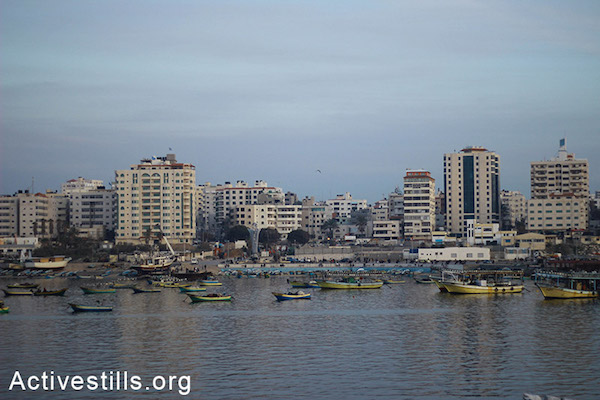
As a result of various ceasefires negotiated during Israel’s wars with Gaza in recent years, fisherman are technically allowed to go six nautical miles off the shore, although there have been documented cases when the Israeli navy fired on — and in some cases killed — Palestinian fishermen inside permitted six-mile zone.
The Oslo Accords, however, stipulate that Israel allow Palestinian fishermen to operate up to 20 nautical miles off the coast. Israel uses the restrictions as one of many types of collective punishment levied in response to militant activity in the Gaza Strip, and even as an attempt to thin out democratic support for Hamas.
But I digress. Is Gaza still under Israeli occupation?
Writing in Jadaliyya last year, Lisa Hajjar explained:
“Occupation” is a legal designation of an international nature. Israel’s occupation of Gaza continues to the present day because (a) Israel continues to exercise “effective control” over this area, (b) the conflict that produced the occupation has not ended, and (c) an occupying state cannot unilaterally (and without international/diplomatic agreement) transform the international status of occupied territory except, perhaps, if that unilateral action terminates all manner of effective control.
Another explanation comes from the United Nations, which takes a more technical approach, arguing that the Occupied Palestinian Territories as a whole are still occupied by Israel, Gaza is a part of the OPT, and therefore Gaza is still occupied.
But the key to the answer lies in Hajjar’s explanation — effective control.
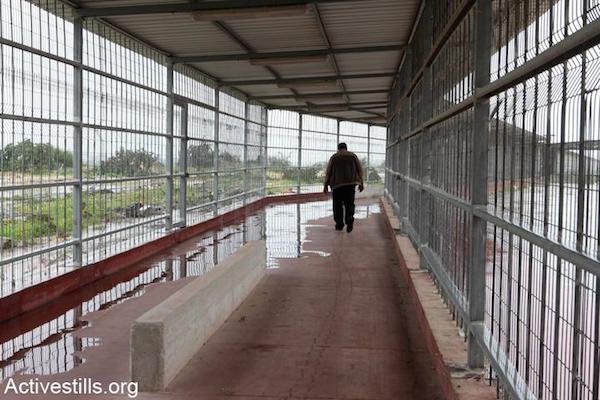
Israel controls life in the Gaza Strip in an astoundingly diverse array of ways. The Israeli Air Force controls the airspace over Gaza. Israel’s navy controls sea travel to and from the coastal strip. The Israeli army controls all of the currently accessible land crossings and decides who can travel through them.
Israel’s army controls the only terminals for commercial imports and exports and it decides what goods, including food items, can be imported and exported through them. Israel controls Gaza’s population registry, and it even controls freedom of movement inside the Gaza Strip. In some cases the army even controls the right to protest inside Gaza.
Military occupation can also be seen in the inherent uncertainty and arbitrariness it suspends over its subjects. For instance, by conditioning medical care on providing intelligence information or the letterhead your request is printed on. Or take Israel’s ban on most agricultural exports — except when it is beneficial or convenient for the Israel market. Or the limits and restrictions Israel places on imports of fuel for electricity and construction materials for rebuilding.
If that level of control isn’t occupation, perhaps somebody should come up with a new term to describe it.