
Court orders the state to begin releasing more than 1,700 prisoners immediately.
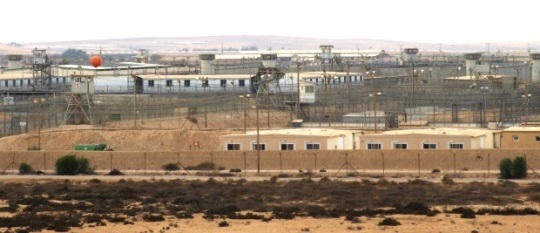
In a landmark ruling, a special nine-justice panel of the High Court of Justice decided to strike down the amendment to Israel’s infamous anti-infiltration bill, which allowed the state to hold African asylum seekers in custody, without trial, for three years (and in some cases – indefinitely). The court’s unanimous decision was that the bill contradicts Israel’s Basic Law: Human Dignity and Liberty.
The amendment in the bill allowing the state to hold without trial any person who entered the country illegally was deemed “disproportionate” to the challenge posed by the entry of tens of thousands African asylum seekers to Israel. The High Court of Justice ordered the state to immediately begin releasing over 1,750 asylum seekers who are held in prison without trial – some of them minors. The release, the justices wrote in their decision, should be completed within three months. (You can read the full verdict in Hebrew here.)
Click here to read how the law was exploited by Israeli police
The anti-infiltration bill was one of the main measures that Netanyahu’s previous government (with wide support in the Knesset) put into place by in order to deter African refugees from entering Israel.
In a rare move, the United Nations High Commissioner for Refugees (UNHCR) asked to join the petition against the law as an amicus curiae (friend of the court), while groups of citizens from south Tel Aviv joined on the state’s side in defending it. Many of the asylum seekers were sent by the state to south Tel Aviv, where municipal infrastructure and socio-economic conditions were already grave. Israeli citizens in the area have since been urging the government to move the asylum seekers from their neighborhoods.
Click here for +972’s Laissez Passer blog on refugee and migrant rights
Sixty-thousand African refugees and asylum seekers are estimated to have entered Israel through the Sinai Peninsula, nearly all of them prior to the construction of a large fence on the Egyptian border. International treaties on refugees forbid Israel from deporting the asylum seekers. However, Israel refuses to examine their individual requests for asylum, forbids them from working legally or from transferring money abroad.
Since the amendment to the anti-infiltration bill passed in the Knesset, thousands of refugees have been held without trial in prisons, including pregnant women and children. Israel also began building new holding facilities for thousands more, but the construction stopped as the influx of refugees subsided due to the constriction of the fence.
Supreme Court President Asher Grunis hinted in the ruling that a shorter holding period for people who enter the country illegally could pass the High Court threshold.
Basic laws are treated by the court as the equivalent of a constitution, and have special status in the eyes of the court. However, in recent years the Supreme Court has taken a more conservative approach, and tried to avoid confrontations with the Knesset. The court has approved many controversial bills, including the citizenship law, banning Palestinians who marry non-citizens from living in Israel, the Nakba law and the Separated Communities law. The recent verdict, which is at odds with most of the Jewish public opinion, is likely to attract wide criticism from the Right and renew attempts to limit the court’s ability to strike down Knesset legislation.
Related:
Israel puts Eritrean woman in administrative detention for buying fake work permit
Seeking asylum in Israel: Deportation without due process
Cracks in the detention regime: Refugee advocates see string of court wins