

After Ramadan, back to your regularly scheduled occupation

During the month of Ramadan, Palestinians were more freely able to pass between the West Bank and Jerusalem. Now it’s back to the old rules of military occupation.

Text by Ahmad al-Bazz / Activestills.org
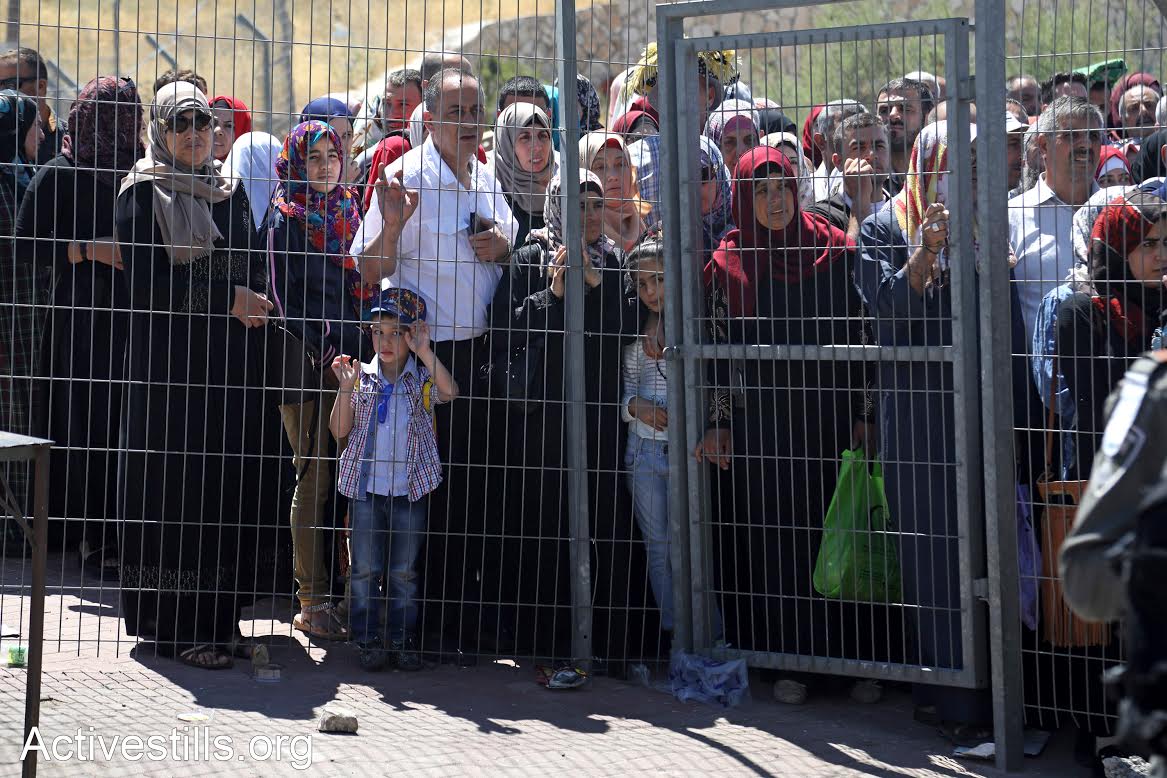
Palestinians wait in line at Checkpoint 300 outside Bethlehem on the last Friday of Ramadan, July 23, 2017. (Haidi Motola/Activestills.org)

The final Friday of Ramadan was also the final day in which Israel temporarily “relaxed” its restrictions on Palestinian movement in the West Bank.
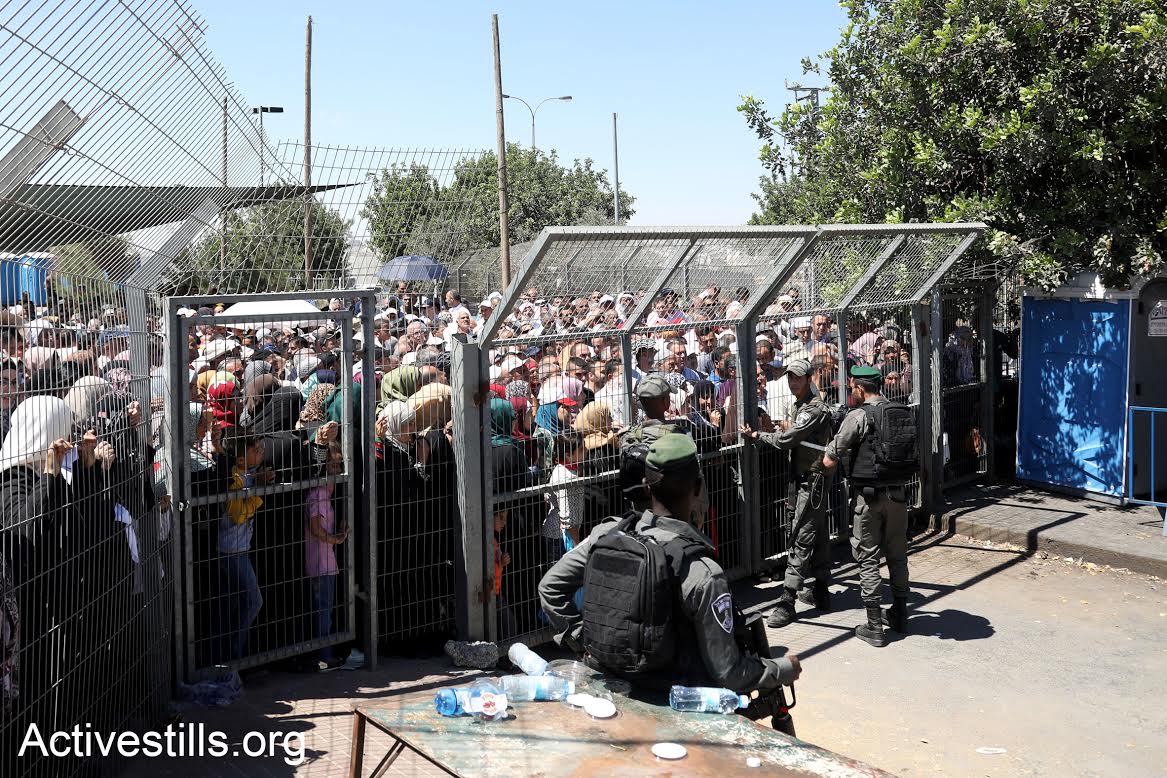
Palestinians wait in line at Checkpoint 300 outside Bethlehem on the last Friday of Ramadan, July 23, 2017. (Haidi Motola/Activestills.org)

Throughout the past month, which Muslims mark as the holiest time of the year, Israel allowed women of all ages, men over 40, and children under 12 to enter Jerusalem for Friday prayers without special entry permits. Palestinians were also granted permission to enter Jerusalem on Laylat al-Qadr last Wednesday, which Muslims mark as the night when the first verses of the Quran were revealed to Muhammad.
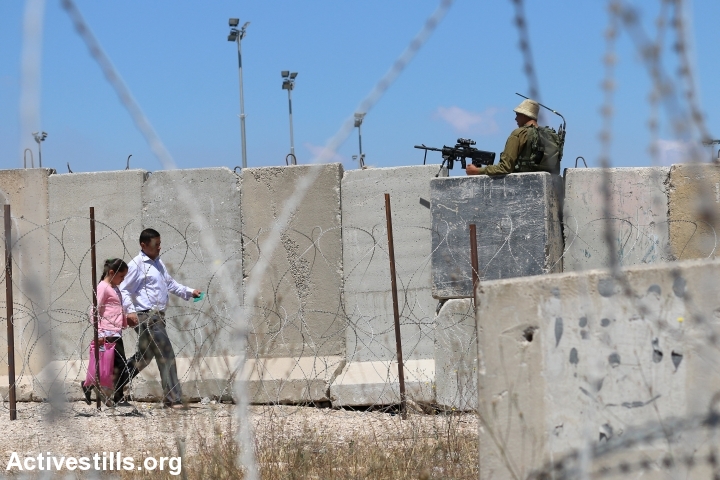
Palestinians are turned away from Qalandiya checkpoint after being forbidden from crossing over to Jerusalem to attend the final Friday prayers of Ramadan, June 23, 2017. Israeli authorities allowed women of all ages, men over 40 and children under 12 to enter Jerusalem without military permits on Fridays during the month of Ramadan. (Haidi Motola/Activestills.org)
Palestinians are turned away from Qalandiya checkpoint after being forbidden from crossing over to Jerusalem to attend the final Friday prayers of Ramadan, June 23, 2017. Israeli authorities allowed women of all ages, men over 40 and children under 12 to enter Jerusalem without military permits on Fridays during the month of Ramadan. (Ahmad al-Bazz/Activestills.org)

Over the past month, hundreds of thousands of Palestinians traveled through both Qalandiya checkpoint near Ramallah and the Checkpoint 300 outside Bethlehem. Some young Palestinians who were not allowed through the checkpoints used ropes and ladders to climb over the separation wall.
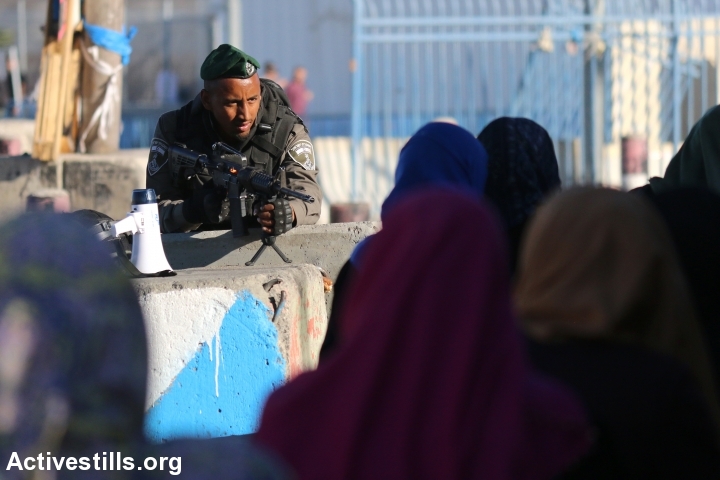
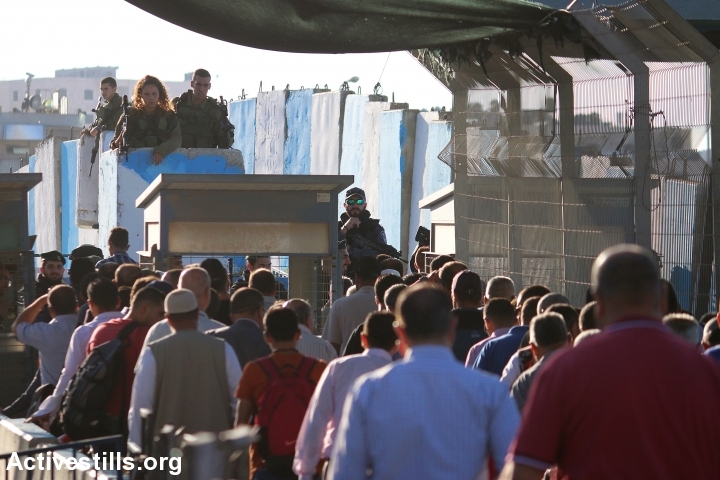
Palestinians from the West Bank cross through Qalandyia checkpoint to attend evening prayers in Jerusalem's Al-Aqsa Mosque, June 21, 2017. Israeli authorities allowed women of all ages and men over 40 to enter Jerusalem without permits on Fridays during the month of Ramadan only. (Ahmad al-Bazz/Activestills.org)
Palestinians from the West Bank cross through Qalandyia checkpoint to attend evening prayers in Jerusalem’s Al-Aqsa Mosque, June 21, 2017. Israeli authorities allowed women of all ages and men over 40 to enter Jerusalem without permits on Fridays during the month of Ramadan only. (Ahmad al-Bazz/Activestills.org)


Palestinians from the West Bank cross through Qalandyia checkpoint to attend evening prayers in Jerusalem's Al-Aqsa Mosque, June 21, 2017. Israeli authorities allowed women of all ages and men over 40 to enter Jerusalem without permits on Fridays during the month of Ramadan only. (Ahmad al-Bazz/Activestills.org)
Palestinians from the West Bank cross through Qalandyia checkpoint to attend evening prayers in Jerusalem’s Al-Aqsa Mosque, June 21, 2017. Israeli authorities allowed women of all ages and men over 40 to enter Jerusalem without permits on Fridays during the month of Ramadan only. (Ahmad al-Bazz/Activestills.org)

Over 250,000 Palestinians lost a rare chance to cross the Green Line after the Israeli government revoked their entry permits. The Israeli government revoked entry permits from 250,000 Palestinians last week following an attack three Palestinians against Israeli security forces in Jerusalem’s Damascus Gate, which killed Border Police officer Hadas Malka. Those permits, which were granted for “family visits” during the month of Ramadan and the three-day holiday of Eid al-Fitr (which begins on Sunday), were meant to be valid throughout the entire month and during the holiday, aside from weekends.
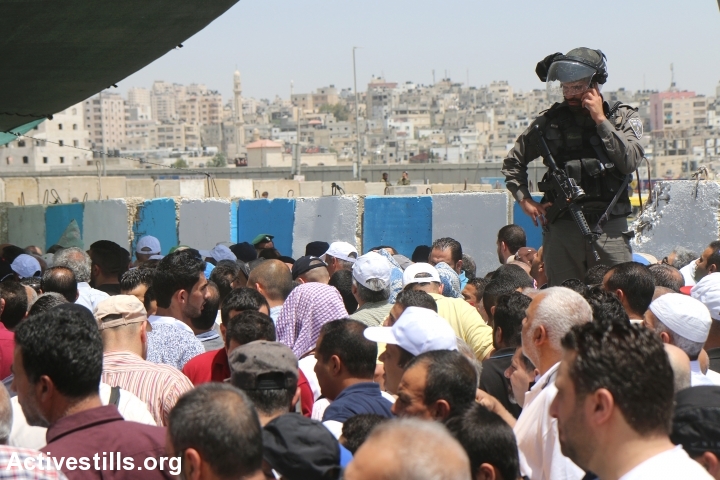
Palestinians from the West Bank cross through Qalandyia checkpoint to attend the second Friday prayers in Jerusalem's Al-Aqsa Mosque, June 9, 2017. Israeli authorities allowed women of all ages and men over 40 to enter Jerusalem without permits on Fridays during the month of Ramadan only. (Ahmad al-Bazz/Activestills.org)
Palestinians from the West Bank cross through Qalandyia checkpoint to attend the second Friday prayers in Jerusalem’s Al-Aqsa Mosque, June 9, 2017. Israeli authorities allowed women of all ages and men over 40 to enter Jerusalem without permits on Fridays during the month of Ramadan only. (Ahmad al-Bazz/Activestills.org)

The “relaxed” restrictions, as they are termed by the Israeli authorities, have come to an end. Palestinians in the West Bank will now return to the rules of military occupation, which control their movement in the area between the Mediterranean Sea and the Jordan River. Until the next Ramadan.
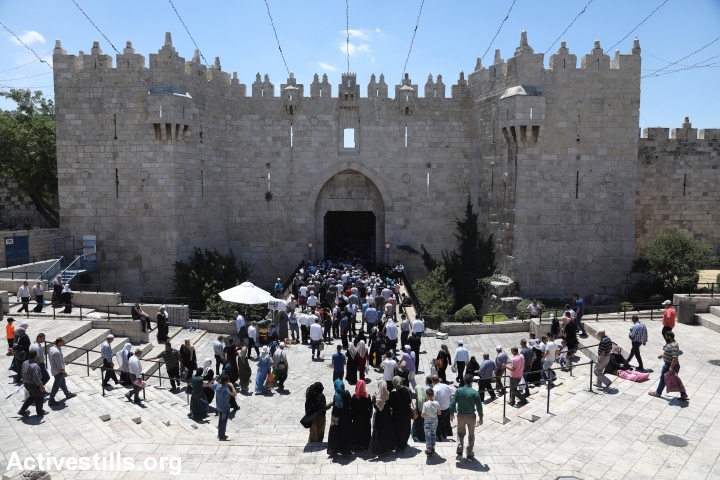
Palestinians enter Jerusalem's Old City through Damascus Gate during the last friday of Ramadan, June 23, 2017. (Ahmad al-Bazz/Activestills.org)
Palestinians enter Jerusalem’s Old City through Damascus Gate during the last friday of Ramadan, June 23, 2017. (Haidi Motola/Activestills.org)

End of article module for Members

TEST TEST GAL Our team has been devastated by the horrific events of this latest war. The world is reeling from Israel’s unprecedented onslaught on Gaza, inflicting mass devastation and death upon besieged Palestinians, as well as the atrocious attack and kidnappings by Hamas in Israel on October 7. Our hearts are with all the people and communities facing this violence.    We are in an extraordinarily dangerous era in Israel-Palestine. The bloodshed has reached extreme levels of brutality and threatens to engulf the entire region. Emboldened settlers in the West Bank, backed by the army, are seizing the opportunity to intensify their attacks on Palestinians. The most far-right government in Israel’s history is ramping up its policing of dissent, using the cover of war to silence Palestinian citizens and left-wing Jews who object to its policies.   This escalation has a very clear context, one that +972 has spent the past 14 years covering: Israeli society’s growing racism and militarism, entrenched occupation and apartheid, and a normalized siege on Gaza.   We are well positioned to cover this perilous moment – but we need your help to do it. This terrible period will challenge the humanity of all of those working for a better future in this land. Palestinians and Israelis are already organizing and strategizing to put up the fight of their lives.   Can we count on your support? +972 Magazine is a leading media voice of this movement, a desperately needed platform where Palestinian and Israeli journalists, activists, and thinkers can report on and analyze what is happening, guided by humanism, equality, and justice. Join us.

Make a Donation