A Knesset bill that would prohibit filming soldiers on duty is meant not only to make the work of human rights organizations impossible, but also to prevent Israelis from having to confront what soldiers are sent to do in their name.
By A. Daniel Roth
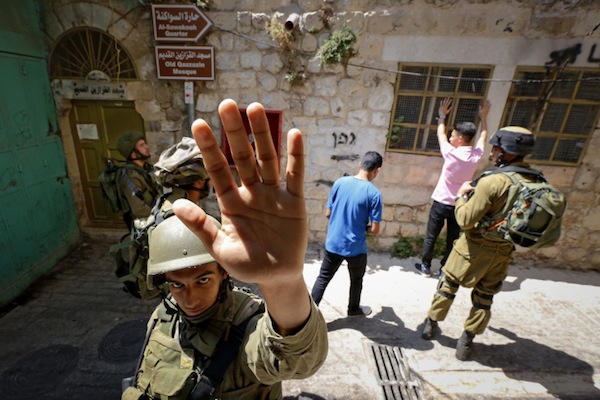
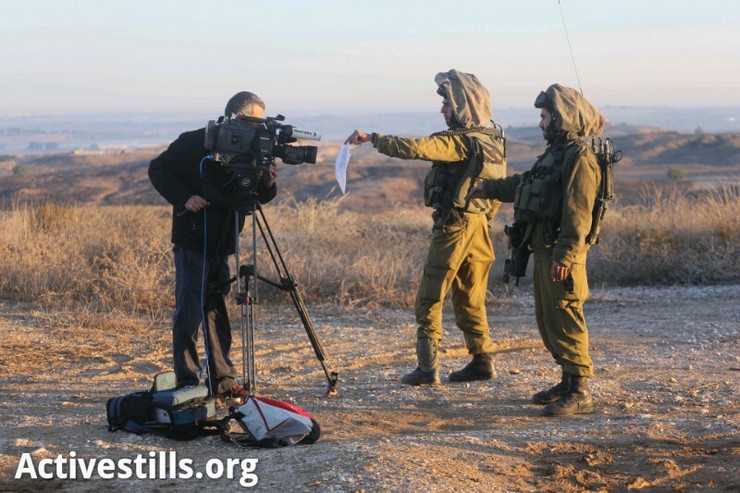
The Israeli government voted this week to support a bill that would criminalize documenting Israeli soldiers tasked with carrying out the violence of the occupation in the West Bank. Supporters of the bill — which could make “videotaping, recording, or photographing Israeli soldiers carrying out their duty with the intention of eroding morale” a crime punishable by five years in prison — believe that stopping the dissemination of violent images from the occupied territories will help Israel’s PR game. But at the core of the proposed law lies something else: a fear of the power that the camera may hold for Israeli soldiers.
While the final version of the bill may ultimately not criminalize all documentation of soldiers — only those “interfering with their duties” —the very idea is terrifying, especially for those who write about and photograph the reality in occupied territories. For journalists and activists alike, cameras are often the only line of defense against violence, and perhaps the only hope for obtaining justice in cases of soldier or settler violence against Palestinians and others.
And yet, the bill’s underlying aim — hiding the shameful and violent reality of the occupation from the world — is a near impossibility in 2018. Its proponents seem to imagine that they can succeed in stopping people from witnessing the brutality and humiliation of the occupation, and ensure that no one will be able to criticize Israel anymore.
If the occupation has continued for more than half a century with near impunity, why is the idea of this law getting so much traction at this particular moment? Many are suggesting the bill is a direct response to the case of Elor Azaria, an IDF soldier caught on video shooting an incapacitated Palestinian assailant in the head two years ago. The video is the sole reason he stood trial and eventually served any time for the killing.
It is also clear that the bill’s supporters are genuinely worried that documentation of IDF activities dissuades soldiers from carrying out their duties. They are worried that the young people who carry out the day-to-day operations of the occupation, who conduct overnight home invasions and stand guard at checkpoints, who arrest children and drive jeeps over hillsides, may catch a glimpse of what they are actually doing somewhere online or on some foreign news service, and begin to falter in their mission.
At the core of this bill is a fear that the young people sent to control millions of civilians will feel shame. And that shame could lead young Israelis to begin questioning the frightening logic of their leaders, who are at the helm of a system that seeks to hide its violence from the world.
This bill should sound the alarm for anyone who still thinks that the political reality in Israel is static and that any of the country’s democratic institutions are somehow protected from this government, which seeks to dismantle the Supreme Court’s power as it gives a green light to shooting unarmed protesters.
In the end, a government that fears the images its policies produce is a government that fears the day its own people will oppose those policies when they know the truth. In the meantime, keep those cameras rolling.
A. Daniel Roth is an educator and journalist based in Jerusalem. His writing and photography is at allthesedays.org. Follow him on Twitter: @adanielroth.