

A settler in the Jordan Valley was killed in his yard Thursday night. This is the third such incident in the West Bank in less than a month.
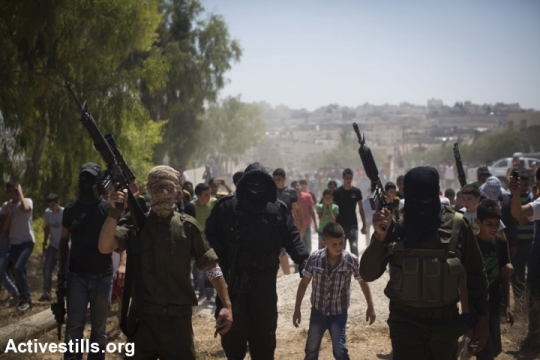
A retired Israeli colonel was killed in his home last night (Thursday) in the Brosh Habika settlement in the Jordan Valley. The incident brings the number of Israeli casualties in the West Bank to three in less than a month. According to his wife, Seraiah Ofer was attacked with iron rods and axes in his front yard. She escaped through a hole in the back fence, while her husband was beaten to death. By the time help arrived, the attackers fled the scene. Five Palestinians were arrested, according to Ynet News.
There used to be a saying at the daily paper I once worked at: one is “an isolated case,” two is a coincidence, and three means a trend. The three cases – a shooting of a soldier in Hebron, the killing of another soldier by a Palestinian who worked with him in a restaurant and last night’s attack – seem unrelated and uncoordinated, but they do create the impression of an escalation in violence, and several more such attacks are likely to have a serious political impact.
All three casualties were described in the Israeli media as soldiers, but that’s mainly due to the Israeli glorification of army service. The colonel was a civilian settler, killed in his front yard; the restaurant employee was also murdered outside the context of his service by a person who knew him. The Hebron casualty, however, was a soldier on military duty, to the extent that this distinction matters.
The temptation to view these cases as a sign of escalation is also a result of a relatively long period with few attacks on Israelis in the West Bank (not a single Israeli was killed by such attacks in 2012). In fact, from an Israeli perspective, 2012 was the quietest year in decades. Yet this narrative misses the point: the ongoing violence of the occupation has never ceased. When (rightly) condemning the killing of Israeli civilians, one should remember that Palestinians have not been able to enjoy the “calm” of recent years. In fact, there has been an increase in the number Palestinian casualties, including the death of three people in a raid on a refugee camp a month and a half ago.
Which brings us to the strange paradox of Israel’s policy towards terror: when attacks on Israelis take place, the willingness of the leadership to offer concessions decreases (“we don’t deal with terrorists”) while public rage rises. However, when there are no attacks on Israelis, the Israeli willingness to offer concessions also decreases, and government ministers tour the world, praising Israel as “an island of stability” in a Middle Eastern sea of turmoil.
The previous Netanyahu term demonstrated this dynamic all too well. The relative calm provided by the Palestinian Authority’s security forces didn’t cause the government nor the public to be more willing to give up land or share power. If anything, the opposite is true. Prime Minister Netanyahu rejected whatever was offered by Israeli negotiators in previous rounds of talks, while his senior coalition partner, Finance Minister Yair Lapid, argued that Israel should insist the Palestinians give up their claim to East Jerusalem, just as they gave up – according to Lapid – the right of return.
The tragic truth is that so far, the only way to get concessions out of Israel has been through struggle. The First Intifada led to the Oslo process, while armed struggle led to the Gaza withdrawal. In both cases, Palestinians paid a dear price for their revolt, but they did manage to get Israel and the United States’ attention. However, when Mahmoud Abbas went the diplomatic route by taking his statehood bid to the UN, Israel and the U.S. threatened him with all kinds of measures.
For years, Israel has demanded that Palestinians stop attacking citizens and soldiers. But when attacks stopped, the Israeli government started raising new, more abstract demands, such as recognizing Israel as a Jewish state. The message to the other side couldn’t have been clearer: cooperation won’t get you anywhere.
Finally, a personal note: whenever news of an attack on Israelis break, I feel, like the rest of the public here, a mixture of anger and sadness, especially faced with horrifying details of the murder(s). However, I also understand why many Palestinians treat all forms of resistance – from civil disobedience to violence – as different parts of the same national struggle for freedom, just as most Israelis treat all resistance groups that predated the state as partners to the same just cause. I do not think Israelis should accept the armed attacks on them, but we should also be asking some honest questions on the alternative we offer this struggle beyond the “stable” status quo, which for the Palestinians is a form of systematic, ongoing violence – one which most of the world so comfortably ignores.