
Israeli snipers have killed two Palestinian journalists and shot at least 20 others in Gaza in recent months. What happened to the soldiers responsible? What is the IDF doing to make sure it doesn’t happen again? The army refuses to say.
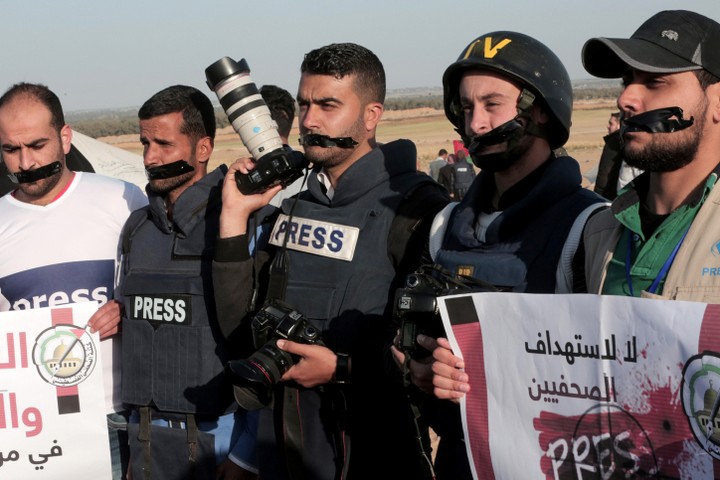
Nearly two months after Israeli army snipers shot and killed two Palestinian journalists while they were reporting inside the Gaza Strip, the military is refusing to answer any questions about whether the responsible soldiers and commanders are being held accountable in any way.
Over the past two weeks, +972 Magazine has contacted the IDF Spokesperson’s Office five times with the following questions: What investigative actions have been taken into the two killings? Has a decision to charge or discipline the soldiers involved been reached? And, is the army is planning any changes to its standing orders or regulations in order to prevent other journalists from being killed or shot in similar situations.
Although the Spokesperson’s Office acknowledged receiving the questions, it ignored them and refused to answer on all five occasions.
On April 6, 2018, an Israeli army sniper shot photojournalist Yaser Murtaja while he was reporting on the Great Return March protests inside the Gaza Strip. According to numerous witnesses who spoke with a range of media outlets in the days and weeks since, Murtaja was wearing a vest clearly visible “PRESS” vest when he was shot. Israeli soldiers shot and wounded at least a handful of other journalists were shot and wounded that day. He died of his wounds the next day.
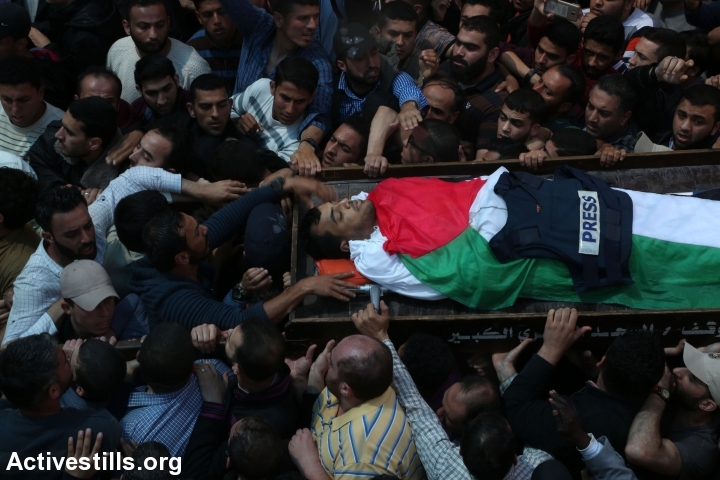
A week later, on April 13, 2018, an Israeli army sniper shot Ahmed Abu Hussein, who was also wearing a “PRESS” vest as he was reporting at the weekly protests inside the Gaza Strip. Two weeks later, he died in an Israeli hospital, where he had been transferred due to the severity of his wounds.
The army has not expressed any remorse for killing the two journalists, although military spokespeople did state that journalists were not deliberately shot. Nevertheless, hours after Murtaja was killed, Israeli Defense Minister Avigdor Liberman accused him of being a Hamas operative, a claim that was largely refuted by reporting on the ground, including by the fact that Murtaja had recently been vetted by the U.S. State Department.
According to the Committee to Protect Journalists (CPJ), Israeli troops have shot at least 22 Palestinian journalists with live fire since the protests in Gaza began on March 30. In total, Israeli troops have killed at least 128 people since the start of the Great Return March, according to the Gaza Health Ministry, and more than 3,500 others have been wounded from live fire. Last Friday, soldiers shot and killed 21-year-old medic Razan al-Najjar while she was trying to evacuate wounded protesters.
The Israeli High Court of Justice recently upheld the rules of engagement that the army has been using to shoot those thousands of people in Gaza these past months. The decision was premised on the army’s assurances that high ranking officers approve each time its snipers target anyone and that it only uses live ammunition as a last resort. Writing in the Times of Israel, a man who says he was stationed on the Gaza border as an Israeli army reservist in recent months, wrote that the army was so meticulous with its sniper fire that “every bullet and every hit is carefully reported, documented and investigated, in Excel spreadsheets. Literally.”
Considering the army’s insistence that it did not shoot dozens of journalists deliberately and that it “know[s] where every bullet landed,” one might think it would see fit to be a little transparent with regards to what it is doing about the fact that its soldiers have shot at least 22 journalists in recent months, killing two.