
In a move unprecedented in Western countries, Israel’s outgoing interior minister announces plan to compel asylum seekers to leave the country. Israel’s High Court has repeatedly struck down laws that authorized the indefinite detention of asylum seekers.
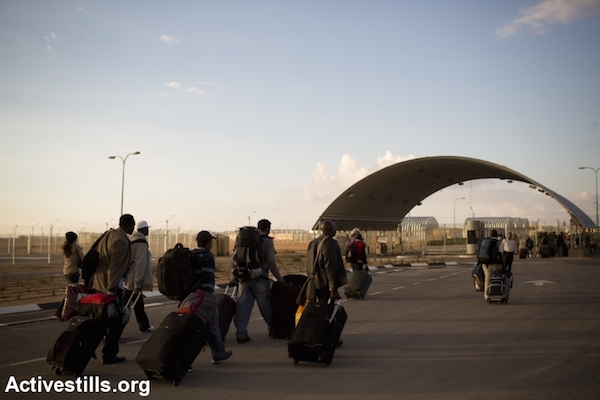
Asylum seekers from Sudan and Eritrea will face deportation to third countries or face unlimited imprisonment in Israel under a new Interior Ministry policy set to be implemented in the coming days. Israel will provide asylum seekers 30 days notice, at the end of which, if one refuses to leave, they will face indefinite detention, according to a statement released by the ministry’s Population, Immigration and Border Authority on Tuesday.
The two countries are said to be Rwanda and Uganda, though Israel has not divulged the information. Up until now, Israel has exerted pressure on asylum seekers to leave by holding them in the Holot detention facility and offering them cash to leave, either back to their home country or a third country. But it always required their written consent. The new policy would be entirely coercive: either they leave, or face indefinite imprisonment.
Six NGOs, among them the Hotline for Refugees and Migrants, Amnesty International and the Association for Civil Rights in Israel, slammed the move as illegal, dangerous and yet expected.
“The initiative of the Ministry of Interior exposes what we’ve all known […] – there is no such thing as ‘voluntary departure.’ The decision of the minister of interior and attorney general removes the disguises the State employed before and makes it clear that Israel will work to deport asylum seekers in any way possible, including illegal ones,” the organizations said in a statement.
According to a report in Haaretz on Tuesday, there is no precedent in the Western world for this type of deportation of asylum seekers to third countries. Israel is a signatory of the UNHCR 1951 Refugee Convention, which forbids compelling asylum seekers to leave a country with the threat of imprisonment.
Outgoing Interior Minister Gilad Erdan said the move will “encourage infiltrators to leave the borders of the state of Israel in an honorable and safe way.” Human rights groups, however, say Rwanda and Uganda are not safe countries for asylum seekers leaving Israel, and that they have no legal status or protection once arriving, ultimately resulting in them leaving for yet another country.
It was not clear if the new measure would be implemented before Israel’s next interior minister, expected to be Shas chairman Arye Deri, is sworn in.
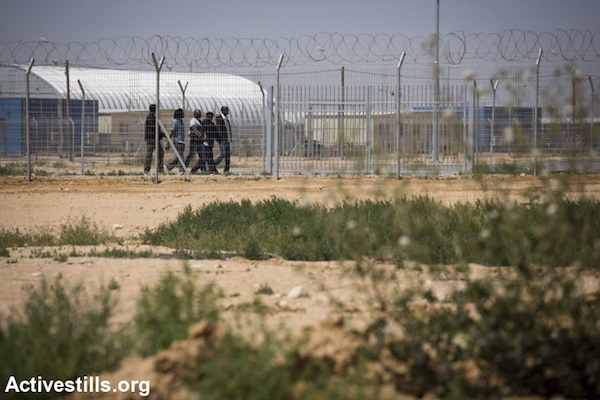
There are over 40,000 Eritrean and Sudanese nationals in Israel currently, of which around 2,000 are currently being held in the Holot detention facility. Fewer than 10 of them have been granted refugee status, with a refugee recognition rate of below one percent. Worldwide, Sudanese and Eritrean asylum seekers are granted refugee status at rates of 60, 70 and 80 percent.
Last September, Israel’s High Court ordered the Holot facility be shut down, striking down for the second time the law that authorized the indefinite detention of asylum seekers. Instead of shutting the facility down, however, as its last act before adjourning for new elections, the Knesset passed a new law that authorizes the detention of asylum seekers for up to 20 months.
It would appear to directly contradict the reasoning behind both of the court decisions that struck down previous laws authorizing the indefinite detention of asylum seekers.
The new policy is being described as a way for the State to expel those asylum seekers who might be released after a 20-month detention.
Those asylum seekers who are not imprisoned in Holot are denied many basic social and health services. Two days before the new policy was announced, a four-month-old baby died due to negligence in a south Tel Aviv day-care center for children of asylum seekers — the fifth to have died since February. The makeshift nurseries are overcrowded, understaffed and lacking government oversight and accountability.