

The resources and attention Israel’s government is investing in fighting BDS indicates that the Palestinian-led boycott movement is making serious inroads.

Israeli President Reuven Rivlin held an “emergency” meeting Thursday with the heads of Israel’s universities and colleges to discuss the academic boycott, which he described as a “strategic threat.”
Israeli institutions and officials have begun addressing the Palestinian-led boycott, divestment and sanctions movement more seriously and investing more resources into fighting it in recent months and years.
New Israeli minister of strategic affairs and public diplomacy, Gilad Erdan, reportedly conditioned his entry into the government on the allocation of adequate funds for fighting BDS.
In the meeting with President Rivlin on Thursday, Technion University President and head of a council of university presidents, Peretz Lavie, warned that “it’s still possible to stop the [BDS] snowball but we are in the eleventh hour.”
Rivlin told the university presidents that he has been taken by surprise by the momentum the academic boycott movement is achieving.
“I didn’t think that there would be a real danger to Israeli academia but the atmosphere in the world is changing,” Rivlin said. In the new reality, the president continued, Israel must treat BDS “as a strategic threat of the highest degree.”
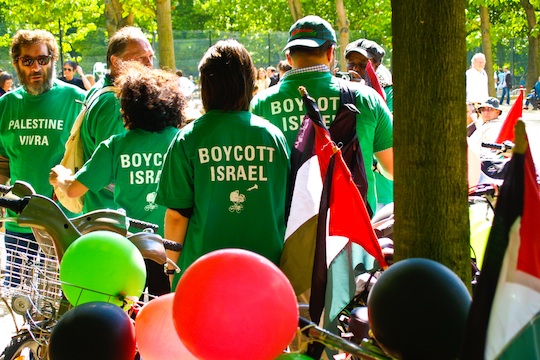
BDS has successfully entered the mainstream in recent years. Whereas Israelis’ contact with the BDS was once relegated to the occasional foreign musicians refusing to perform in Tel Aviv, is now being felt in academic forums across the world, as international corporations pull out of Israeli public works projects, and major investment and religious institutions begin divesting from companies that do business with Israel.
The non-violent grassroots movement modeled on South African anti-apartheid campaigns is viewed by a threat by many in Israel. Of the movement’s three demands — an end to the occupation, full equality for Palestinian citizens of Israel, and a resolution for Palestinian refugees of 1948 — Israelis specifically cite the refugee issue as a veiled attempt to undermine Israel’s Jewish identity.
On the other hand, Palestinians and supporters of the boycott movement argue that BDS simply demands that Israel end the occupation and fully respect Palestinian rights, without prejudging any political outcome.
Up until recently consensus wisdom in Israel was that despite increasing gains and small isolated victories, the boycott is a marginal movement. By allocating significant resources to fighting it and describing BDS as a strategic threat, however, the Israeli government is now telling us that boycott might actually be more effective than previously thought.
President Rivlin said on Thursday that he sees himself “as a soldier” in the war against the boycott of Israel, but he did not define what Israel is fighting for in that war: continued occupation? Inequality? Segregation?