

In rare move, Israeli Nature and Parks authority supported the petition against the wall; the court’s decision largely hangs on Defense Ministry admitting the contested section of wall isn’t a priority.
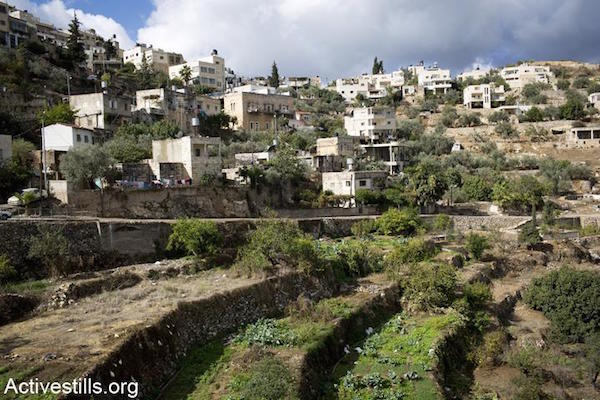
Israel will not build a section of the separation barrier through the UNESCO recognized village of Battir in the West Bank anytime soon.
Israel’s High Court of Justice on Sunday dismissed without prejudice a petition against construction of the section of the West Bank barrier’s route that would pass through the village’s ancient agricultural terraces.
The decision was largely based on the Israeli Defense Ministry’s assertions that constructing the section of the barrier was not a priority — either from a security or budgetary standpoint — and that there were no current plans to carry out further construction.
Read more on Battir and the wall here
The justices, however, ordered the state to notify the village 60 in advance if they do plan to begin construction in the future, allowing legal proceedings against it to begin once again.
In effect, the court closed the door to any construction without its further intervention.
“To make any changes to the decision the Israeli occupation will have to start new procedures from scratch that will take several years,” head of Battir’s local council told Ma’an news, calling the ruling a “a victory for Palestine as a whole.”
“The direct implication of the ruling,” according to Attorney Michael Sfard, who represented Friends of the Earth Middle East in the petition, “is that if and when the state is ready to go ahead with construction, litigation will be re-launched from scratch.”
“Though not strictly prohibiting future construction of the fence,” Sfard continued, “freezes it for years, and possibly forever.”
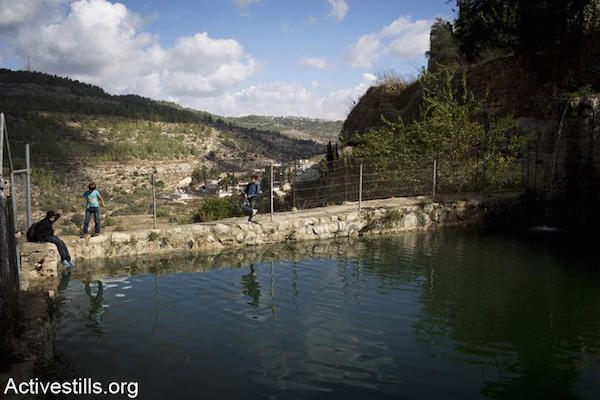
The case gained international interest earlier this year when the Palestinians successfully had Battir’s ancient agricultural terraces and aqueducts designated a UNESCO World Heritage Site, registered in the State of Palestine. Previously, only the Church of the Nativity in Bethlehem had gained similar status in Palestine.
The justices cited the UNESCO recognition in their decision.
“We have managed to lift, at least temporarily the danger of a barbaric destruction of a world ancient cultural heritage site,” Sfard said following the court’s decision.
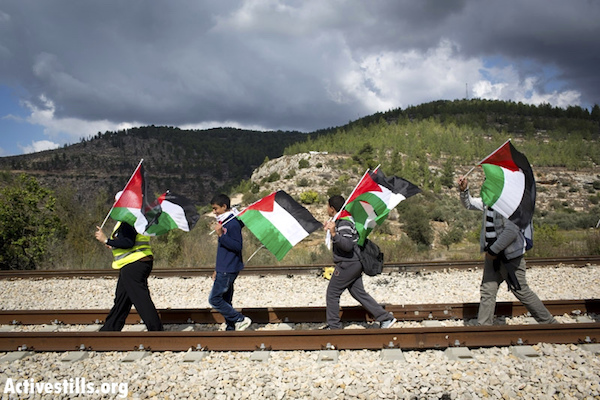
One of the State’s central security arguments for the barrier was the need to protect the Tel Aviv-Jerusalem rail line. In the coming years, however, a new high-speed rail line is scheduled to open on a new route — passing through a different part of the West Bank — undercutting the State’s argument irrelevant, Sfard pointed out.
Construction of the wall would have severely and irreversibly damaged the agricultural terraces and the Roman-era irrigation systems, which are thousands of years old. Additionally, it would harm the ability of the Palestinian residents to farm their land.
The petition was filed by residents of Battir and Friends of the Earth Middle East, and was supported by the Israel Nature and Parks Authority in addition to several local settler groups.
Related:
The Wall, 10 years on: Dividing land – water, fauna, flora
Take a (virtual) ecological tour of the occupied West Bank
In fight against the wall, does Cremisan have a prayer?