
A new document published by the IDF’s chief of staff rebuts Netanyahu’s attempts at consensus-building on the Iran nuclear threat.
The so-called Israeli consensus on the Iranian threat took another blow on Thursday after IDF Chief of Staff Gadi Eizenkot published a new document titled “IDF Strategy.” News on the document was published in Haaretz, describing Eizenkot’s five-year plan for building up the army under financial restrictions, which includes plans for slashing budgets, re-allocating funds, and prospects for bringing other security agencies into the fray.
The document also lists the gravest threats presently facing the Israeli military: Islamic State, Hezbollah, and Hamas. And while Iran is mentioned as a supporter of Hezbollah and Hamas, not once is it deemed a “nuclear threat,” contradicting Netanyahu’s claim that the Islamic Republic will continue advancing its goal of achieving a nuclear weapon, despite the Vienna deal.
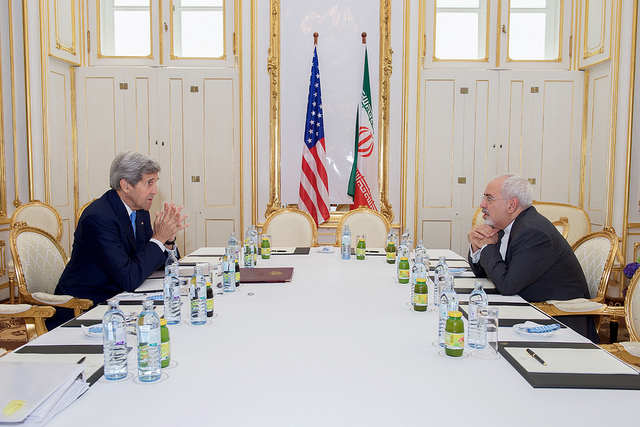
On the very same day, senior political correspondent Alon Ben-David published an op-ed in the Ma’ariv daily [Hebrew], in which he claims that as Netanyahu plans to go head-to-head with President Obama, the army is breathing a little easier. According to Ben-David, the deal will buy the IDF time, at least on the Iranian front, and will “delay the Iranian nuclear threat by at least a decade, which will allow the IDF to spread and downgrade its investments in preparing for a military option against Iran.”
But aside from a few voices in the Israeli media, why are army officials refraining from speaking out in favor of the Obama deal? A recent op-ed by Haaretz‘s Amir Oren may hold the answer. According to Oren, there are people in the IDF Intelligence Corps, including those who work in the research division dealing with Iran who “have a very positive view of the nuclear agreement.” Their views, Oren writes, have reached the likes of Eisenkot and head of the Israel Defense Forces Intelligence Corps, Maj. Gen. Herzl Halevy, where they have been “swallowed up as if they had never existed.”
While the military echelon remains silent, a number of high-profile, former members of Israel’s security establishment have already come out in favor of the deal. In a July interview with the Daily Beast, former Shin Bet head Ami Ayalon said “Israelis are failing to distinguish between reducing Iran’s nuclear capability and Iran being the biggest devil in the Middle East.” Following the formulation of the framework agreement in Lausanne in April, former Mossad chief Ephraim Halevy praised the deal in an op-ed for Yedioth Ahrnonoth for forcing Iran to “agree to an invasive and unique monitoring regime, which is unparalleled around the world.”