

The recent success in dealing with racism on the soccer field could be an example of how to deal with the Israel-Palestinian conflict. Except when taking into consideration that an extreme act of violence was ‘needed’ first.
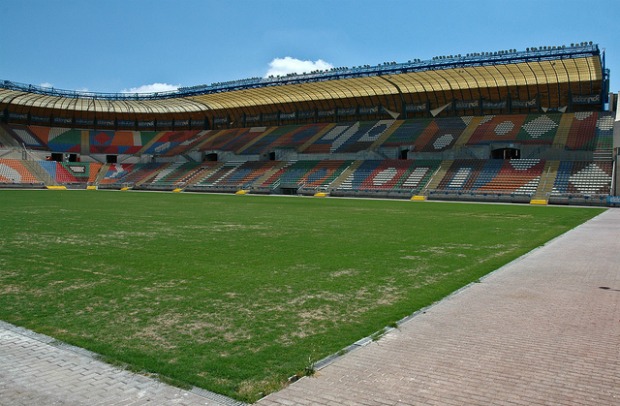
My colleague Noam Sheizaf wrote recently about the racism of the Israeli soccer club Beitar Jerusalem. Tensions were running high in the club after it signed two Muslim players from Chechnya, and the hardcore right-wing fans – part of an organization called La Familia – were probably behind the act of arson that took place at the club’s headquarters in Jerusalem. After the arson, the pressure on the club to take care of the racism in its ranks peaked – and apparently bore fruit. Noam uses this example of outside pressure successful in the micro area of the soccer fields, and hints at the macro:
… The case of Beitar Jerusalem – for years, written off as a lost cause – teaches us that on human right issues, outside intervention is effective (perhaps it’s the only effective thing); and that public opinion and local institutions are more attentive and receptive to pressure than it seems, as long as its presented in a clear and effective way.
I agree with this assessment wholeheartedly.
But, what interests me even more in this analogy is the question it raises, at least for me: what is the arson attack, on the macro level?
When the arsonists lit the headquarters on fire, many in Israel were laughing at an inside joke. “Burning the club” is a line from a comedy sketch performed by Israel’s leading comedy-trio, Hagashash Hahiver. The following clip is a short commercial for a cable company, which has a recording of those lines from the skit from the 70s, when “burning the club” was first mentioned. Coincidentally, the two characters are a reporter – and a Beitar Jerusalem fan!
“Fan, what exactly are your demands as fans?”
“OK, we want to say who the refs will be! If not, we’ll burn the club!”
“Tell me, can you number your demands?”
“Why number if I can count them for you? OK, we want 15 wins a year, minimum. 15, yeah? If not, we’ll burn the club. We also want to say, once and for all, who the players will be, who the coaches will be, who the result will be, and who the weather will be.”
“And if this is not given?”
“We’ll burn the club.”
In time, “burning the club” became widely used in Israel as a term that meant something along the lines of “throwing out the baby with the bathwater.” When someone wanted to go all the way with something, even if it meant harming himself and others important to him, he’s “burning the club.” Sometimes for spite, along the lines of “if I’m going down, I’m taking everybody with me.”
So, here they were, Beitar fans, in real life, bringing the term “burning the club” into reality. Yet, I digress. My initial questions was, what is the equivalent of “burning the club” when it comes to the Israel-Palestinian conflict? If, as Noam hinted, outside pressure is the way to go – will it only arrive after the club here is burnt? How extreme is this event? How large? How deadly?
I shudder at the thought.


