
Markets remained empty and many worshipers stayed away from mosques during the first few days of the Muslim holy month due to a violent escalation with Israel that left 27 Palestinians and four Israelis dead.
By Amjad Yaghi
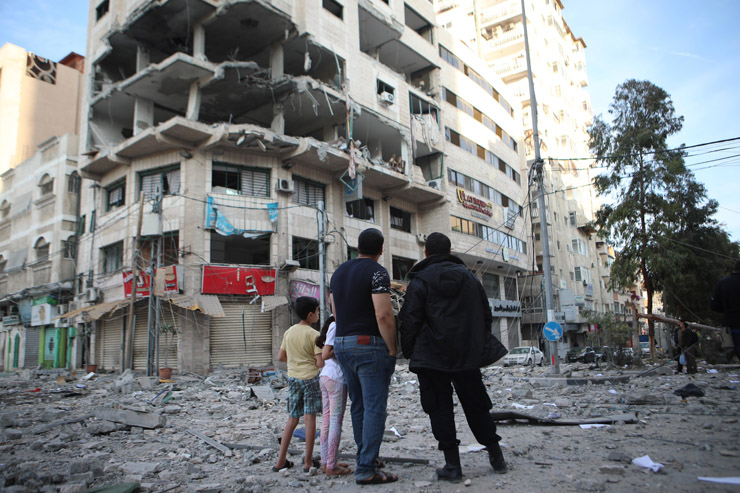
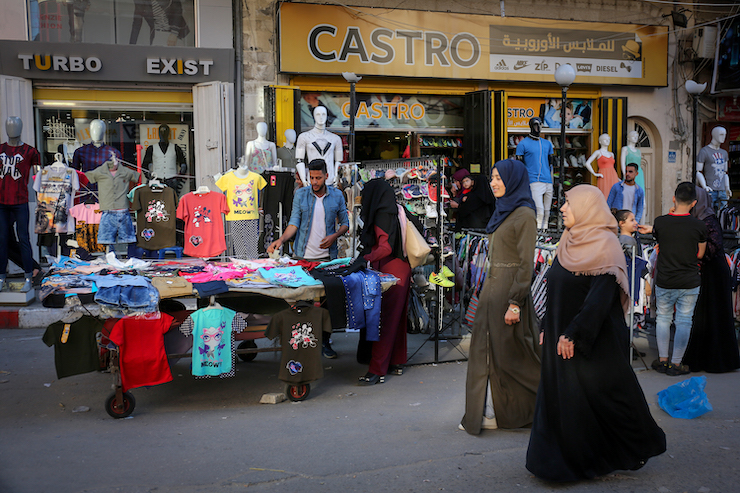
GAZA CITY — The foot traffic in Gaza’s markets was scarce already in the days leading up to the Muslim holiday of Ramadan. The Gaza Strip is seeing its worst economic crisis in 10 years, and Gazans are struggling to celebrate Ramadan, especially after two days of intense Israeli airstrikes that left 27 dead and over 150 wounded across the strip and four dead in Israel.
On Sunday morning, with the sounds of bombing and artillery fire still ringing out on Gaza’s eastern boundary — and as Palestinian factions fired hundreds of rockets into southern Israel — a small stream of people nonetheless headed to the markets to buy food for the holiday, during which Muslims fast from dawn until sunset.
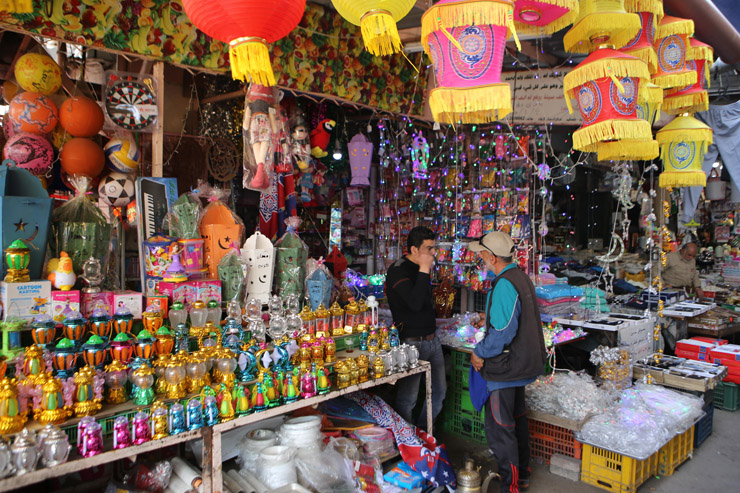
In Al-Zawiya market, the oldest in the eastern part of Gaza City, the decorations put up a week ago have not been removed. And yet, the market, one of the most popular attractions in the city, has seen few visitors.
Mohammed al-Borei, who sells Ramadan lanterns and decorations in al-Zawiya, said Sunday that he was expecting to sell most of his stock. The escalation, which sowed widespread fear of even greater violence, however, kept people at home.
“I opened the shop hoping to celebrate Ramadan amid the bombing and destruction,” al-Borei said. “I thought there would be a truce between Gaza and the Israeli army. We know Israeli bombing isn’t new to Gaza, but what sin have we committed to be deprived of the one month we have waited for all year?”
“All religious rituals should be respected across the world,” he continued. “If Palestinians attacked the Israeli army during the Jewish holidays, we would be hearing that Palestinians are ruining the celebrations. We don`t want bombing. Just as their religion encourages peace, so too does Islam. We want peace during Ramadan.”
A marred holiday
Many Gazans didn’t go for prayers in mosques over the past few days, fearful of Israeli air raids.
Ayman Abu Mohadi, who lives in the Al-Naser neighborhood of Gaza City, said everyone remembers their suffering during the 2014 war, which also fell on Ramadan. His children, he said, still remember the last war.
Back in in 2014, Abu Mohadi said, he lied to his younger children about the sounds of war in order to make them feel safe. “I used to tell them that [the explosions] are wedding fireworks. Now they are a bit older and I shouldn’t have lied at them.”
Abu Mahdi wonders where he and his family — and everyone in Gaza — can escape to if the violence escalated into a full-on war. There is nowhere to escape to, he adds — not even any bomb shelters.
No food security in Gaza during Ramadan
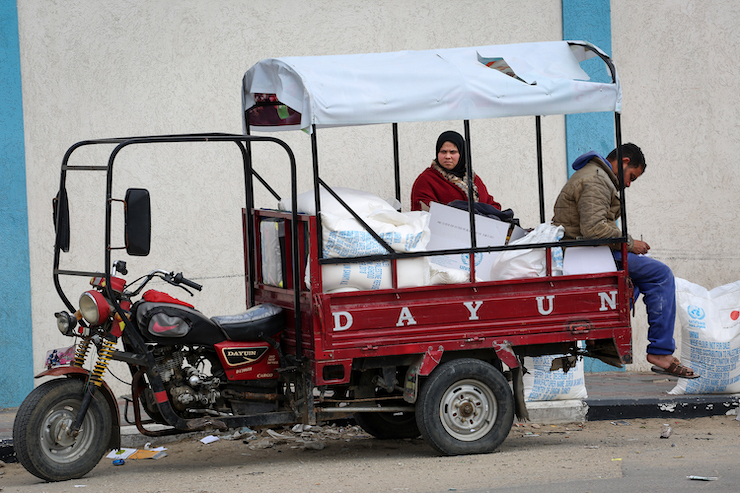
As of December 2018, more than 68 percent of Palestinian families, nearly 1.3 million people, were suffering from food insecurity, a result of the dire economic situation and widespread poverty in the strip. The majority of Palestinians in Gaza are thus dependent on the good graces of Islamic charities and government ministries for food.
And yet, Gazans remain steadfast in their determination to hold a proper Ramadan celebration. In Gaza City’s Fras market, 59-year-old Amena Hamida was buying vegetables to prepare Maqlouba, a traditional Palestinian rice dish served on the first days of Ramadan, all while ignoring the sounds of Israeli warplanes and the shelling. She wants to make her grandchildren happy, she said.
“This is our 13th year under siege,” she said. “What have Israel and Gaza gained? The children of Gaza, too, want to celebrate Ramadan, they want to go to the sea at night, accompany their parents to mosques, and play with the Ramadan lanterns.”
“We pray to Allah and ask for peace and security to prevail,” Hamida continued. “We have many tasks and family visits during Ramadan, and our children love the holiday. But instead of celebrating, we spend all our time thinking about when the bombs will stop falling.”
Amjad Yaghi is a journalist from Gaza.