

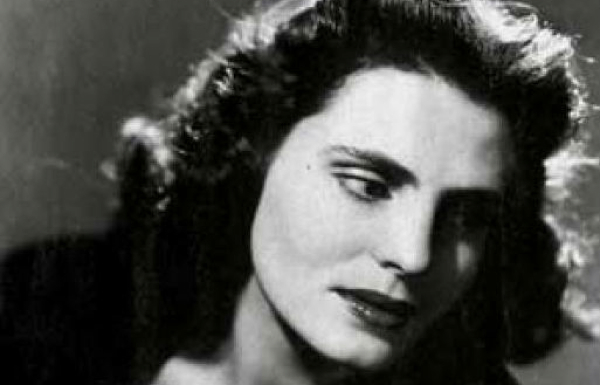
Sometimes we get lucky. A dear friend working in the diplomatic community invited me and my girl to the grand opening of the Portuguese film festival in Tel Aviv. We didn’t even know what movie was to be screened, but enjoyed the port served in small glasses and the company of dignitaries wearing neckties. Israeli society is extremely informal and the attire common at events of the international community make one feel pleasantly “abroad.” Then we stepped into the theatre, the lights were dimmed and suddenly we were back home.
The film was named “Amália,” and told the story of Fado legend Amália Rodrigues. Its first scene showed a 1974 concert Rodrigues gave in Lisbon, only a few days after the Carnation Revolution was completed and the totalitarian Nova Estado regime toppled. As the singer joins her musicians onstage, the crowd erupts in protest. Someone yells: “Fascist!” another: “Your beloved Salazar is gone! What will you do now?”
Rodrigues, portrayed by the talented Sandra Barata, began singing, and I began thinking of the West Bank settlement of Ariel. In recent weeks the arts scene here gushed over the opening of the first center for the performing arts across the Green Line. Major Israeli theatres, among them the national theatre “Habima,” are scheduled to send their productions there in the coming year.
About 50 members of the Israeli theatre scene signed a letter stating that they would refuse to perform in the occupied territories. This won them plenty of disdain from the Israeli public and reprimands from the Prime Minister and the Minister of Culture. Quickly, this exceedingly rare act of protest by Israeli performing artists began to fall apart. Several of the signatories demanded that their names be removed from the letter, citing a “misunderstanding.”
Whose misunderstanding what? Amália Rodrigues misunderstood history. She refused to be the people’s voice against a corrupt and violent regieme. Historians now tell us that she did support dissidents in secret, and in the film she is shown bribing an official in order to free a poet friend who was taken a political prisoner. Still, in public she never said a word against Salazar and his murderous PIDE policing force. She drank chapmagne with him while others were tortured by his thugs. She could not see past the present moment to a future in which Salazar would be seen worldwide as Portugal’s greatest historical enemy. Her reputation survived (with a voice like hers, how could it not?), but it suffered as well.
The artists who agree to perform in Ariel, and those who fear voicing an opinion against the use of Israeli culture in reinforcing the occupation, see only the present and only the narrow local perspective. Around here, the occupation is taken with a shrug. Most Israelis accept Ariel as being “Israel proper” depite the fact it’s built in the very heart of the West Bank, designed so as to render direct transportation between Ramallah and Nablus impossible. We’ve been taught not to care that its sewage is polluting the water of nearby Palestinian town Salfit, or that it was built largely on land stolen from local farmers, or that its existence forces hundreds of thousands to go through humiliating checkpoints, or that its very existence is a huge obstacle on the way to the peace we all say we want.
The artists who accept such notions and embrace the settlements may one day find themselves facing a hostile audience (as they already would – abroad). Times change, regimes fall, occupations end. I would advise every Israeli artist to think about Amália Rodrigues, then think about singers who took the cause of human rights and liberty even when those were unpopular or unsanctioned: Mercedes Sosa in Argentina, Victor Jara and Violetta Parra in Chile, Vladimir Vysotsky in the Soviet Union, Fela Kuti in Nigeria and more, and more. Think about all of them, dear artists, and ask yourselves who would you rather be.