
The peace process, which began ceremoniously on the White House lawn in September 1993, has come to an end. We must find a new way.
By Menachem Klein
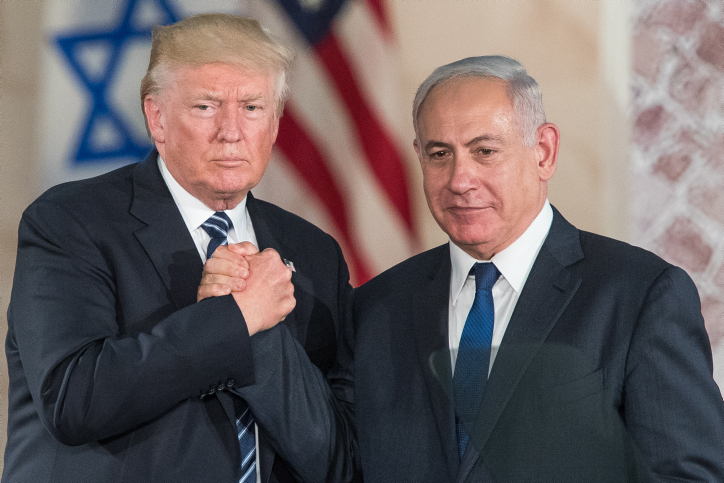
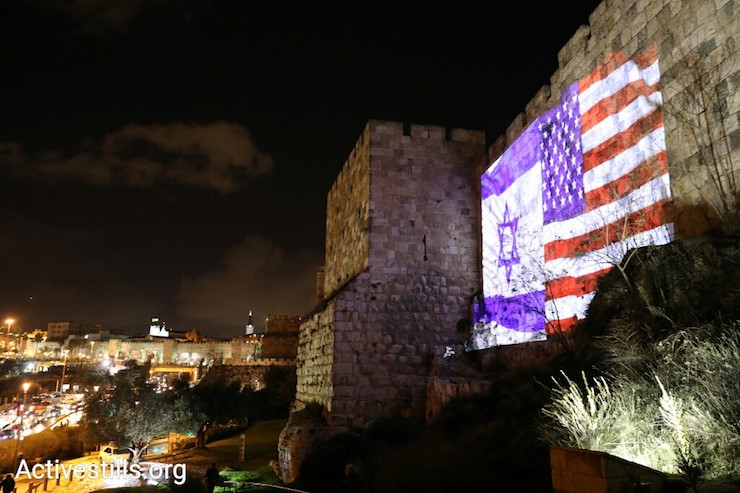
Conferences around the Arab world marking 100 years since the Balfour Declaration have just barely come to an end, and along comes a mini-Balfour and hands occupied Jerusalem over to Israel on a silver platter (apologies to Lord Balfour for the comparison). It is almost unnecessary to mention the many political and social differences between today and 100 years ago. But what molds Palestinian and Arab political opinion is not the historical reality, but rather the image, context, and framing, which connect Balfour’s declaration to the present day.
In Ramallah, the sense is that the United States has betrayed President Mahmoud Abbas. It did not matter how much he strove to maintain security coordination with Israel (despite his sinking public support), whether he tried to place obstacles in the reconciliation process with Hamas, or if he supported a peaceful two-state solution to the conflict.
For Palestinians and Muslims, the significance of Trump’s declaration is that the U.S. has unequivocally sided with Israel on the issue of Jerusalem, as well as on ending the occupation of the 1967 territories. Trump emphasized that the U.S. would support two states “if agreed to by both sides,” thus giving Israel the right to veto any solution it deems unsuitable. Netanyahu has previously said he is willing to grant the Palestinians a “state minus,” and only in part of the West Bank.
The American-Israeli consensus is that there will be no Palestinian state and no capital in Jerusalem. This, as opposed to the Palestinian and Arab consensus which supports the establishment of a Palestinian state in the West Bank and Gaza Strip, with a capital in East Jerusalem. A dead end.
It is true that in the past Washington and Jerusalem held similar positions. But the U.S. always been openly committed to the principles of a peace process based on international law and previous UN resolutions. Now this era is gone as well. Trump has exempt Israel from all commitments to international law and UN Security Council resolutions, which established that annexing Jerusalem and the settlements are both illegitimate and unlawful. Abbas’ inevitable conclusion is clear: the U.S. has moved from acting as mediator to blind, open support for the Israeli Right. The peace process as we knew it, since it began ceremoniously on the White House lawn in September 1993, has come to an end. We must find a new way.
The government in Ramallah had estimated that this would come to pass, and since Tuesday morning official Palestinian radio has broadcasted protest directives on behalf of the government in the run-up to Trump’s announcement. As America’s new policy became clear, the points of contention between Hamas and the PA over national reconciliation have been put aside, with the focus now placed on the need to promote unity.
Abbas also faces challenges. Since he replaced Arafat, the Palestinian president has pinned his hopes on American mediation, while rejecting any other proposed strategy. His speech in response to Trump’s declaration showed that he is not stepping back from his stated goal of a Palestinian state based on 1967 borders, with East Jerusalem as its capital, and a return of Palestinian refugees based on UN Resolution 194 and the Arab Peace Initiative.
In doing so, he rejected chief Palestinian negotiator Saeb Erekat’s remarks from earlier this week, according to which Palestinians will move toward a civil rights struggle and demand one state. Abbas does not want to replace the two-state goal, and thus must see whether or not he can find a new way to get there. The Palestinian, Arab, and Muslim world will, in the coming days, likely be asking whether there is a different international mediator that can replace the Americans, especially in light of the schisms in the European Union, and whether it will be able to find a way to put enough pressure to sustain the peace process at a time when international law is no longer sufficient.
Menachem Klein is a professor of political science at Bar Ilan University. He was an advisor to the Israeli negotiating team during the 2000 peace talks, and is one of he leading members of the Geneva Initiative. His book, Lives in Common: Arabs and Jews in Jerusalem, Jaffa and Hebron, was selected by The New Republic as one of 2014’s ‘best books for understanding our complicated world.’ This article was first published in Hebrew on Local Call. Read it here.


