
Israel has not slowed down its demolition of Palestinian structures in the occupied territories in 2017, after a year which saw a record number of buildings destroyed.
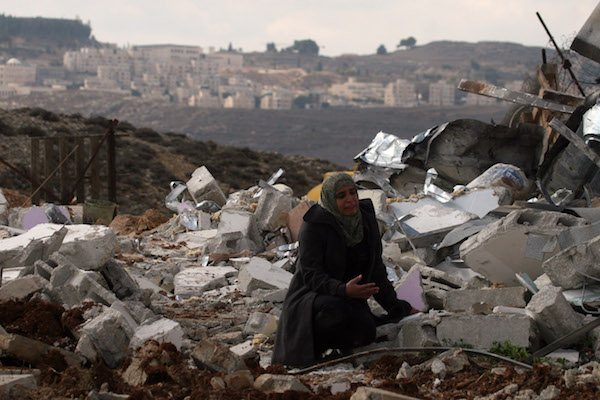
Demolitions of Palestinian structures in the West Bank and East Jerusalem in 2017 have so far continued at much the same rate as in 2016, a year in which Israel destroyed a record number of buildings in the occupied territories.
In January alone, Israeli forces have demolished 121 structures in the West Bank and 16 structures in East Jerusalem, according to figures from the United Nation’s humanitarian agency that were provided to +972. The razing of these buildings displaced 211 people in the West Bank, including 123 children, and 26 people in East Jerusalem, including 11 children.
In 2016, Israel demolished 1,093 structures in the West Bank and East Jerusalem, displacing 1,601 people, according to the UN — the highest number on record since the agency started keeping track in 2009. The total number of demolitions in the occupied territories in 2016 was more than double that in 2015.
Most of the demolitions take place in Area C, which makes up 60 percent of the West Bank and is under full Israeli security and administrative control. Very occasionally, Israel also demolishes buildings in Areas A or B — which are ostensibly under Palestinian administrative control.
However, almost two-thirds of demolitions orders in Area C are issued against structures in communities that straddle the boundaries of Areas A or B. This is deliberate: most Palestinian cities are in Areas A and B, meaning that major Palestinian population centers such as Nablus and Ramallah have most, if not all, of their borders set by the reach of Area C territory, creating invisible walls around them. By issuing disproportionate numbers of demolition orders in Area C communities that straddle Areas A/B, the Israeli army’s Civil Administration is ensuring those walls remain intact.
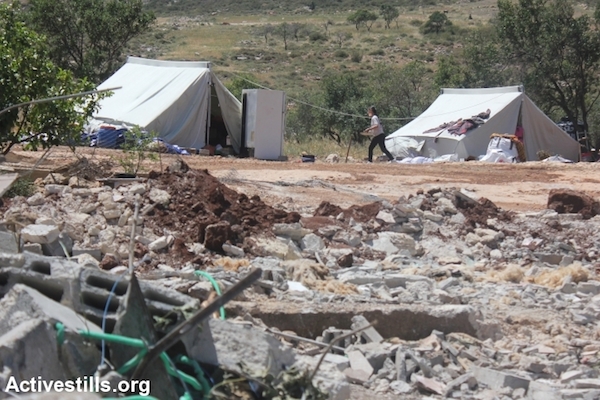
Israel justifies administrative demolitions by arguing that the structures in question have been built without a permit. However, it is almost impossible for Palestinians in Area C to obtain building permits: between 2010 and 2014 the Civil Administration granted just 1.5 percent of requests.
Moreover the IDF admitted last year that when it comes to demolitions in the West Bank, “enforcement against Palestinians is hundreds of percentage points higher [than against Jews].”
As Alon Cohen-Lifshitz pointed out on this site last week, the Civil Administration did in fact significantly increase the number of building permits it approved for Palestinian construction in Area C in 2016, granting 37 compared with seven in 2015 and nine in 2014.
However, as Cohen-Lifshitz explained, the vast majority of these permits were granted to requests submitted by the Civil Administration itself. In other words, Israel is giving itself permission to build on Palestinians’ behalf.
This sounds all well and good, until you take into account where all of the Civil Administration’s building plans are located: adjacent to Areas A and B, right at the outer edges of territory that is under full Israeli control. Cohen-Lifshitz further pointed out that these new building projects are designed to house Palestinians who will, at some point in the future, be forcibly relocated from their existing homes.
The threat of forced transfer to just the other side of Palestinian Authority territory, the increase in demolitions, and the fact that most of these demolitions take place in Palestinian communities that straddle Areas C and A or B, are all in the service of one goal: the “clearing” of Israeli-controlled territory in the West Bank in order to maximize the space available for settlement expansion, while concentrating Palestinians in ever-smaller areas.
As I wrote in a previous article on this topic, Israel’s practice of demolitions and its intent to sweep the people it has made homeless into ever-shrinking corners of the occupied territories signifies its policy in the West Bank: “to control and coop up its Palestinian population while engineering optimal conditions for its own deepening hold on the area.” It’s one small step from that to annexation.