
Israeli society’s neglect of the Arab community over the past 20 years has left many Arab citizens with feelings of antagonism or apathy towards the “only democracy in the Middle East.”
By Thair Abu-Rass
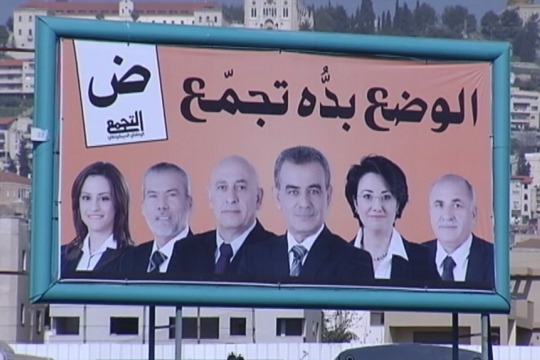
With the Knesset elections only a day away, speculation about the final outcome is at its peak. Most analysts agree that these elections are unpredictable, with the exception of two facts: Bibi Netanyahu will be elected as prime minister, and there will be a considerable boycott of the election among the Palestinian Arab community in Israel.
A Haifa University study conducted last month claimed that only 50.7 percent of the Arab citizens eligible to vote will exercise their right to do so. In other words, half of the Arab population in Israel has lost faith in the political system and in the Arab MKs’ ability to affect the national agenda.
Arab participation in Israeli elections has been in decline over the past decade-and-a-half. In the 1999 elections, 75% participated; however, in the 2009 elections only 53% voted, and according to some polls, this number is only expected to decrease.
Some Israeli analysts claim that the decline in Arab participation is a result of the frustration from Arab lawmakers, but this is only partly true. Historically, the percentage of Arab voters has been similar to that of Jewish ones. In previous elections, the decline in the Arab vote has been met with apathy from the Jewish population in the country.
The situation has changed this time. Several Israeli newspapers have run opinion columns this week calling on Arabs to vote. The Haaretz newspaper took an unusual step of printing an editorial in Arabic encouraging Arabs to vote. Labor party leader Shelly Yacimovich began an extensive last-minute campaign on Arab websites and Arabic-language social media networks, also hoping to grudge out a few more Arab votes.
This effort could be too little, too late. The Israeli society’s neglect of the Arab community over the past 20 years has led many Arabs to have feelings of antagonism or apathy toward the “only democracy in the Middle East.” “This is not our country,” and “they are all anti-Arab” are just some of the comments I have been hearing over the past two months. The Arabs see no difference between the parties, whether it is the liberal Left or the hawkish Right. Neither side has accepted the Arab minority as a legitimate member with aspirations in a democratic and multi-cultural Israeli society.
In order to get the Arab vote out, the governments of Israel must stop alienating and marginalizing Arab political parties and Arab citizens must be reconsidered as part of the political game. In addition, there is a need to encourage a civic political discourse at the expense of national politics: a discourse based on civil rights and the creation of a secular political system that truly represents all citizens.
Moreover, the Israeli left must re-seek the peace flag, which has been neglected after the second Intifada. There is little doubt that the negligence of the peace process by the Labor Party has jeopardized its status in the Arab community.
In a poisoned political atmosphere that enhances Jewish supremacy over the democratic character of the state and with the introduction of various anti-democratic bills and laws, Arabs will naturally find themselves out of the political system.
Most polls indicate that the right wing enjoys a solid lead of about 300,000 votes. It is expected that the number of Arabs not heading to the polls will stand at 400,000. With a voting ratio of 95-5 in favor of the center-left within the Palestinian population, just do the math!
Thair Abu-Rass is the Director of the Fair Representation & Employment Equity project at Sikkuy – The Association for the Advancement of Civic Equality in Israel.
Related:
Haaretz prints editorial in Arabic, urging Palestinian citizens to vote
Solidarity, not directions: On Haaretz’s Arabic editorial
Final Israeli elections poll: Netanyahu’s bloc with a clear majority


